[Rehabilitation & Interior Design of the Chaichi Boutique Hotel]
[2023]
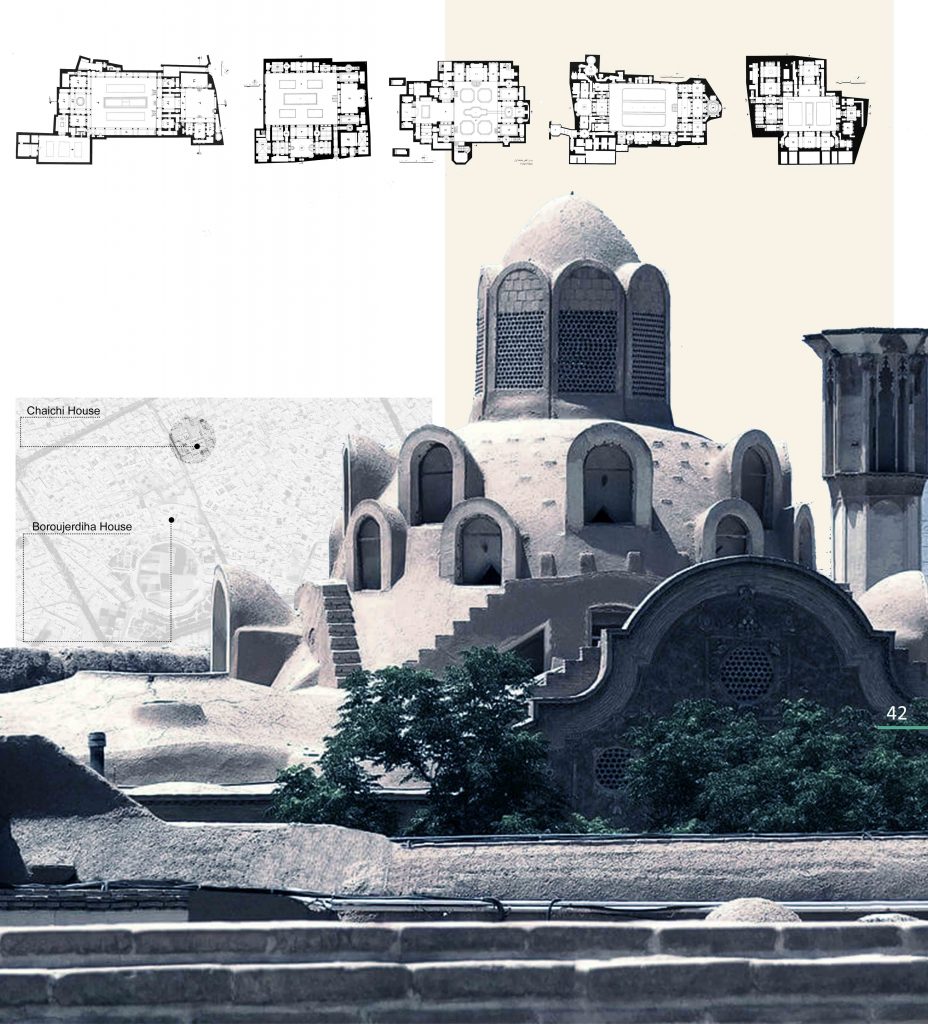
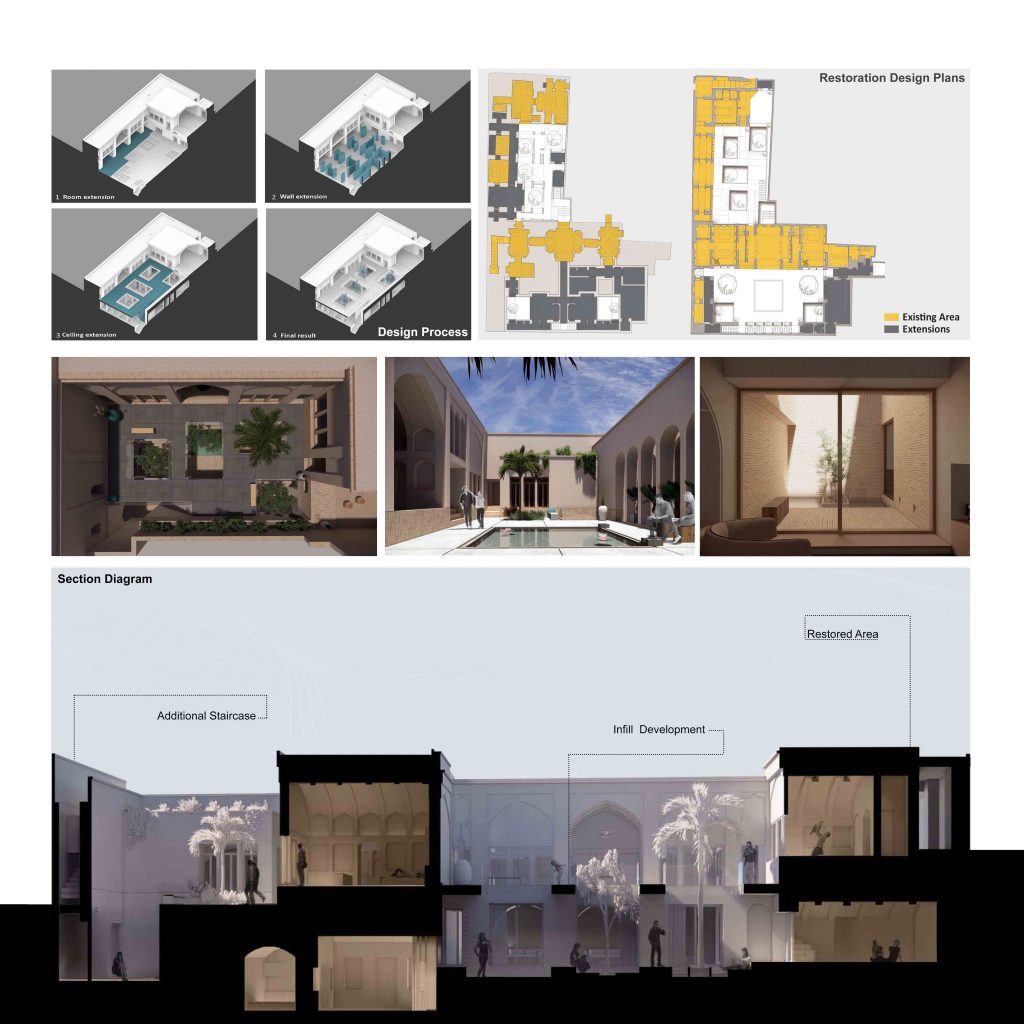
The Chaichi mansion which dates back to Qajar era, is one of the historically valuable houses in Kashan. This building has undergone some changes, additions and removals. While the historical houses of Kashan can be divided into two categories of with or without Godalbaqcheh (sunken courtyard), our case study contains both patterns.
Formation of the plan and the orientation of vernacular and historical buildings in Iran has been influenced by natural elements and climate, as well asculture and economy. Due to the climatic requirements of Kashan, its historical houses are introvert; the culture of introversion in the Iranian architecture emerges as central yards in adaptation with environmental conditions in the buildings which contain to inner and outer spaces.
A unique orientation cannot be defined for all the houses within the historical core of Kashan but generally speaking, it can be said that most of the houses have north-south or northeast-southwest orientations. In addition to the immense impact of climate on the architecture of houses in Kashan, the level of financial capability can also be considered as one of the most influential factors on the orientation of these buildings.
The Chaichi mansion has been built according to one of the most original Iranian architectural patterns as far as its spatial characteristic is concerned.
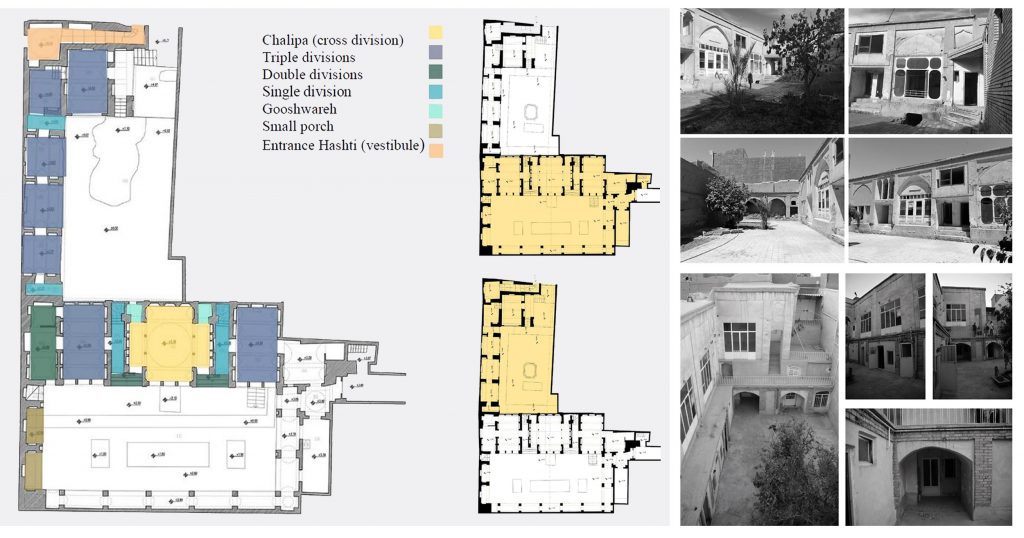
The northern side of the house is a Shahneshin (alcove) with Chalipa (cross) pattern and two Gooshwarehs (two smaller symmetrical rooms in both sides of Shahneshin) at the end. The central part is covered by a Colomboo vault and the lateral parts are covered by Kajaveh vaults.
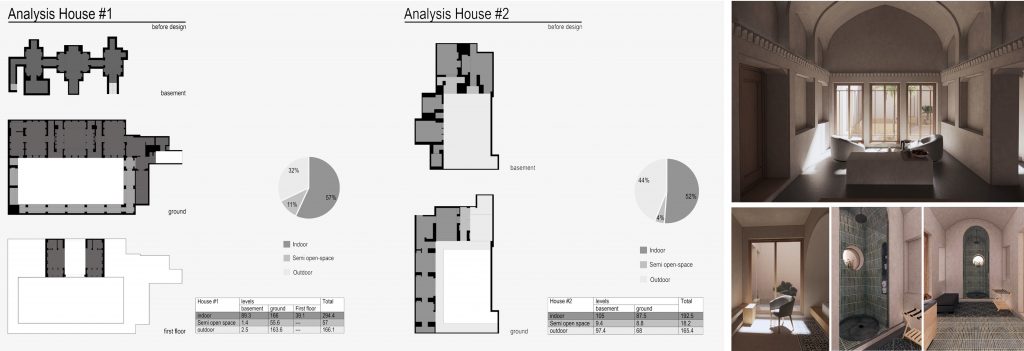
There are two single patterns with corridor function in sides of Shahneshin and next to them, there are rooms with long triple patterns and with Kajaveh covering. In the western part of this side, there is a room with a double pattern. This side has a symmetrical façade including triple, double, triple divisions and a single one. The remaining part of the western side also contains two porch-like structures with double divisions. Building number two, has a structure similar to the houses with sunken courtyard which has unfortunately lost a major part of its spatial structure during the recent decades. In the northern side of this house there is a Hashti (vestibule) with a square plan, along with a Dalan (corridor) and a single room with triple divisions. The western side consists of three rooms with triple divisions and two parts with single division adjacent to them.
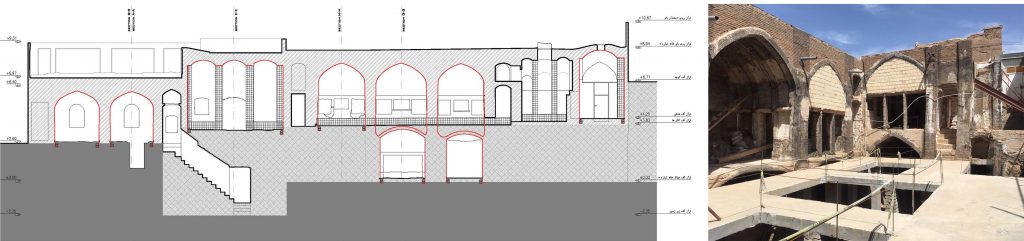
In the restoration plan of the Chaichi mansion, the structural consolidation of the building has been specifically considered in addition to preservation and restoration of the original architectural elements as the city of Kashan is prone to earthquake and as the life safety of the visitors is necessary in transformation of the house into a hotel. The city of Kashan has various faults and has experienced several earthquakes throughout time that has caused the death of thousands of its inhabitants.The intervention approach for the Chaichi mansion consists of reduction of its seismic vulnerability and at the same time minimization of the possibility and potentiality of damage occurrence as well as the preservation of the original construction technics in all parts of the buildings.