


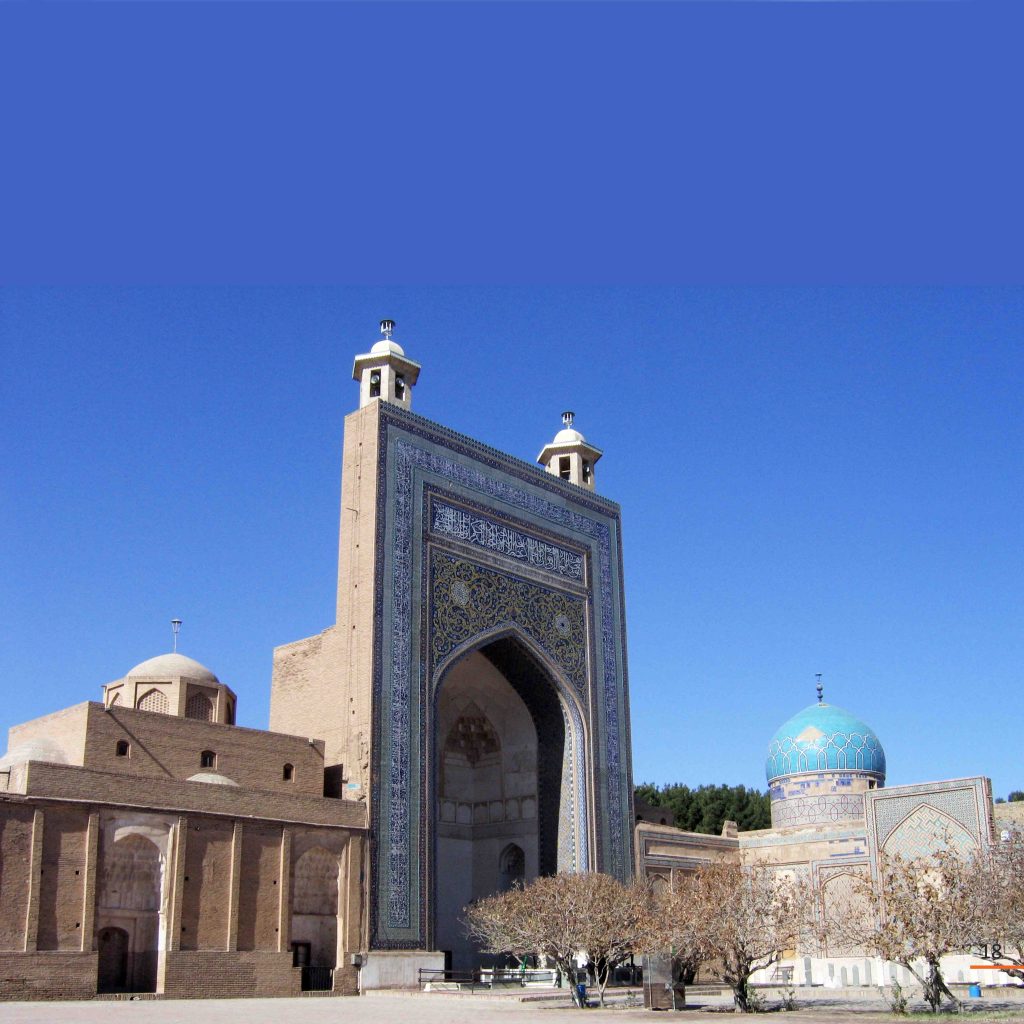
Sheikh Ahmad-e Jami mausoleum complex is a collection of religious buildings, mosques, houses, and tombstones all around the central tombstone of Sheikh Ahmad-e Jami, an Iranian Muslim sufi who lived between 1048 and 1141 in Torbat-e Jam, Khorasan, Iran. The shrine and its Sufi shaykhs secured patronage from Mongols, Kartids, Tamerlane, and Timurids. Entering the mausoleum is through a wooden door beautifully decorated in Kufic script. The mausoleum complex is over 800 years old. The mausoleum has been in the favor of the city. Pilgrims and mystics still practice ʿirfan (‘Gnosticism) and travelers visit the city, which is a source of income for the population. The shrine complex has now been renovated with private and public funds from Iran’s Cultural Heritage Organization. As a shrine for a Sunni Sufi cult, the shrine complex started sliding into decline when Iran’s Shahs took the Shiʿi path in 1501, but is today enjoying a renaissance. Two seminaries (madrasa) that teach Sunni curricula to males and females have also been added.
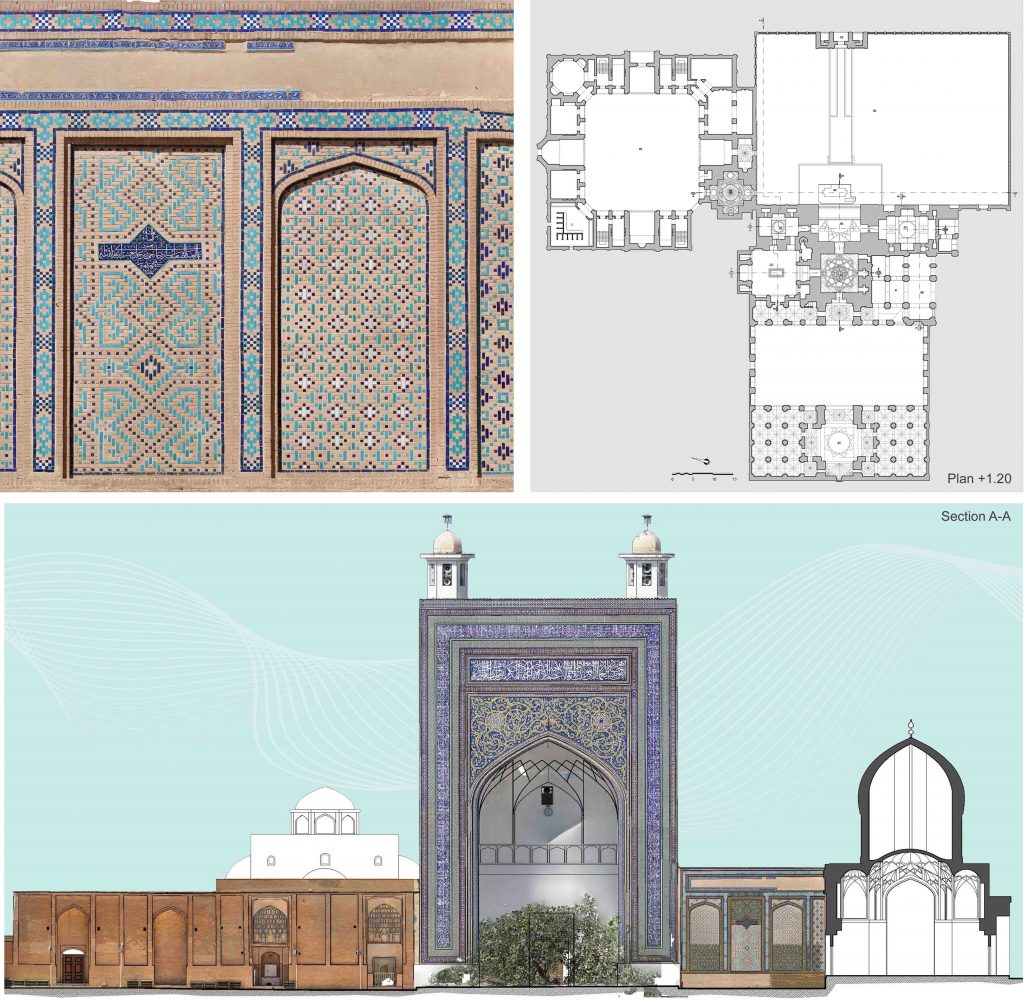
In order to register the complex in the UNESCO World Heritage List, the General Department of Cultural Heritage of Central Khorasan Province suggested the documentation studies of this building. For this purpose, by using the photogrammetry method and the use of DJI drone, as well as ground photography, images of the internal and external elevations of different parts of the building were prepared. After accurate targeting, all the images were transferred to the AutoCAD environment and drawn.
Go to top